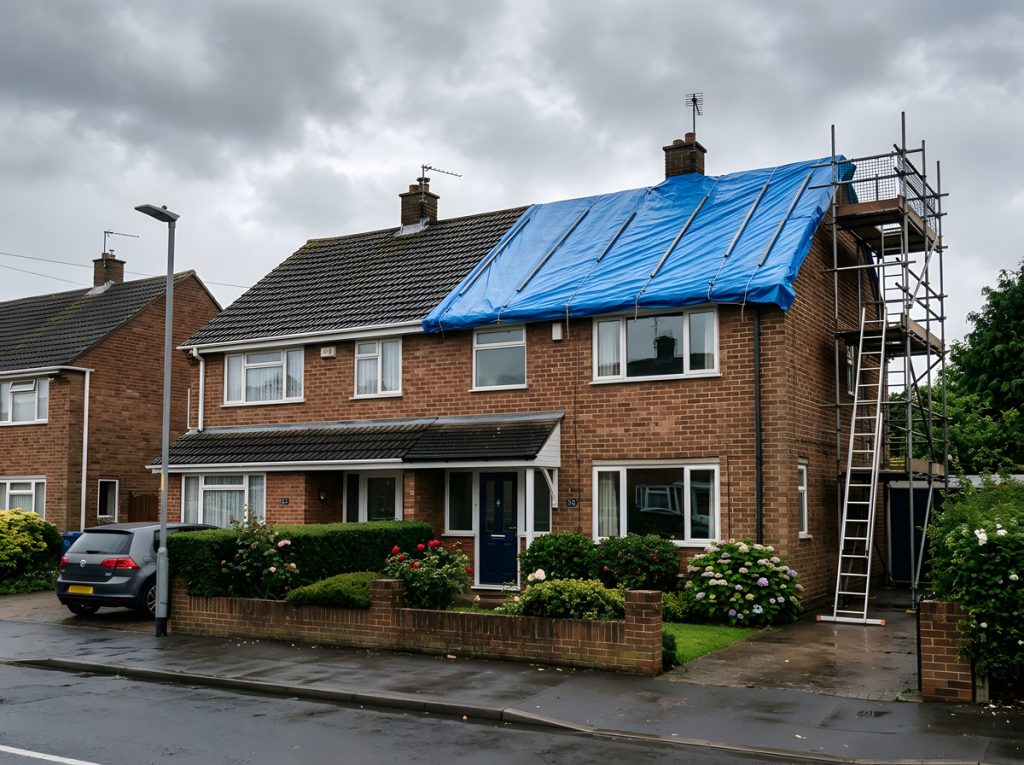
Strong winds and heavy rain can expose a roofing problem very quickly. A tile lands on the driveway, water starts dripping into a bedroom, or guttering comes loose above the front door. Once the immediate surprise has passed, knowing what to do next can feel less straightforward.
Your priority is to keep people safe, limit damage where practical and give your roofer enough information to assess the situation. You do not need to identify the exact fault or attempt a temporary repair yourself.
Here are sensible steps to take while waiting for professional help.
1. Check for Immediate Danger
Before moving furniture or taking photographs, consider whether the affected area is safe to enter.
Look for visible warning signs from a safe position. These might include a bulging ceiling, falling plaster, loose roofing materials or guttering hanging away from the building.
Keep people and pets away from affected rooms and any outside area where debris could fall. If tiles have landed beside a doorway, use another entrance if one is safely available.
Water near lights, sockets or electrical equipment needs particular care. Avoid touching wet fittings or switches and seek advice from a qualified electrician. Only isolate the electricity if you can reach the consumer unit safely and it is dry.
If there is an immediate threat to life, contact the emergency services.
2. Move Belongings Away from Leaks
If the room is safe, move belongings away from dripping water and damp surfaces. Start with items that are easily damaged or difficult to replace, such as laptops, paperwork, photographs and soft furnishings.
Furniture may need moving further than you expect. Water can spread across a ceiling or run down a wall, so leaving a chair just beside the visible drip may offer little protection.
Where larger items cannot be moved safely, cover them with waterproof sheeting if you can do so without approaching a damaged ceiling.
Avoid carrying heavy furniture alone or spending time beneath an area that appears unstable. Protecting belongings matters, but it should never involve taking a personal risk.
3. Catch Drips Where It Is Safe
A bucket or suitable container can help limit damage from a small, accessible leak. Placing an old towel beneath the container may reduce splashing and help protect the floor.
Check it regularly while the room remains safe to enter. During sustained rainfall, a container can fill surprisingly quickly.
Do not puncture a bulging ceiling to release trapped water. It may contain more water than expected, and the surrounding plaster could give way.
Similarly, avoid removing ceiling panels or pulling away wet materials to investigate. Explain what you can see to your roofer and keep the area clear until it has been assessed.
4. Stay Off the Roof
A missing tile can look easy to reach from a ladder. After a storm, however, the roof may be slippery, other tiles may be loose and further gusts can arrive with little warning.
Avoid climbing onto the roof, leaning out of upstairs windows or using ladders to inspect the damage.
Trying to secure a tarpaulin yourself can also create problems. Working at height is hazardous, and poorly secured coverings may come loose or cause additional damage.
The same caution applies to flat roofs. Standing water can conceal defects, while the condition of the deck beneath the covering may be uncertain.
Let your roofer decide how the roof can be accessed and whether temporary weather protection is appropriate.
5. Record What You Can See Safely
Photographs can help your roofer understand the problem before arriving. They may also be useful if you contact your insurer.
Take pictures from ground level or through a safely accessible window. Include a wider view showing where the damage is, followed by closer photographs using your camera’s zoom.
Inside, record damp patches, dripping water and affected belongings, provided the room is safe.
Make a brief note of when the problem started and what was happening at the time. For example:
- Water appeared during heavy rain on Tuesday evening.
- The leak is above the rear bedroom window.
- Two tiles were found on the patio.
- Dripping slows when the rain stops.
These observations are often more useful than trying to name the damaged roofing component.
6. Give Your Roofer a Clear Description
When requesting help, start with your address, contact number and a short explanation of the problem.
Mention whether water is entering the property, whether anything appears loose or unstable, and which part of the building is affected. Say if the problem involves the main roof, a garage, an extension or a porch.
Useful access details include a locked side gate, a narrow passage or roofing above a conservatory.
You might say:
“Since last night’s wind, water has been dripping through the ceiling above our upstairs landing. We can see a gap in the tiles on the front roof slope from the driveway. We have photographs, and there is side access.”
That gives the roofer a clearer starting point than “the roof is damaged”.
7. Contact Your Insurer if Appropriate
If you think you may make a claim, contact your insurer and ask what information they require. Cover depends on your policy and the circumstances, so avoid assuming that every repair will be included.
Ask about their process before authorising substantial work where practical. Explain if urgent attention is needed to prevent further damage.
Keep photographs, written quotes, invoices and receipts for any reasonable emergency measures. Do not discard damaged belongings unnecessarily before asking whether they need to be inspected, although immediate safety concerns must come first.
8. Understand What the First Visit May Involve
During ongoing storms, a roofer may need to assess the situation before confirming when work can safely begin. Wind, heavy rain, access and the need for scaffolding can all affect the next step.
An initial visit may involve temporary protection, with a permanent repair arranged once conditions allow. Ask what the proposed work covers and whether further inspection is needed.
At Longbridge Cladding & Roofing Ltd, we provide roof repairs across Longbridge, Redditch, Bromsgrove and surrounding areas.
Call 07842 280287 to explain the problem and request assistance. Clear photographs and a few practical details can help us assess what is needed.