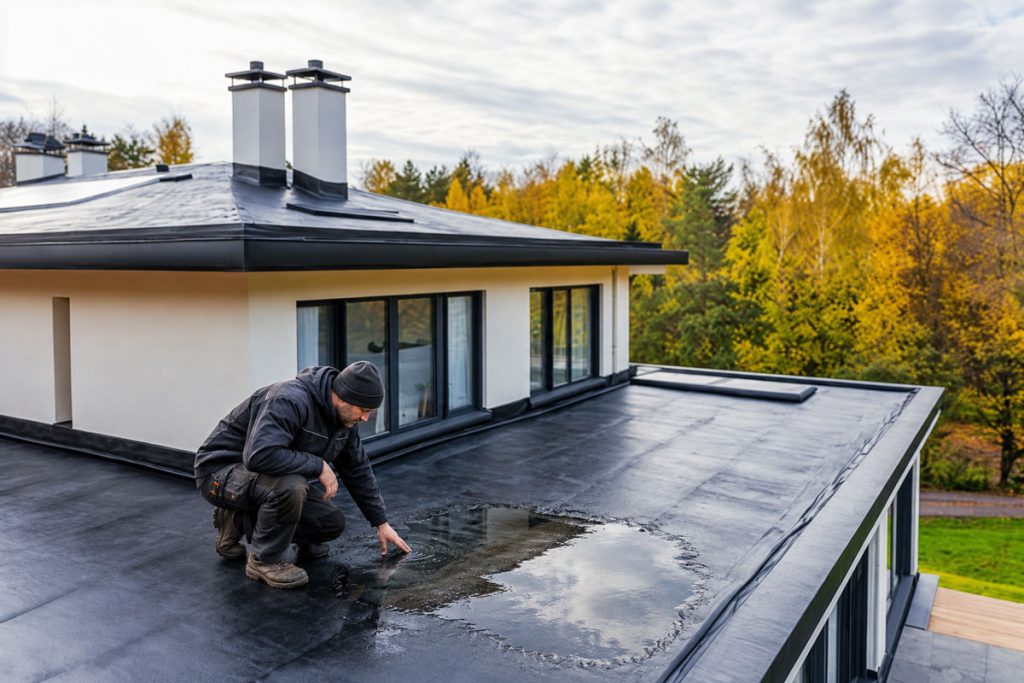
After a heavy downpour, it is quite common to notice water sitting on a garage, extension or porch roof. Sometimes it drains away shortly afterwards. Sometimes the same puddle remains long after the rain has stopped.
So, when does standing water become a concern?
The answer depends on how long it stays, how much of the roof it covers and whether there are other signs of deterioration. A puddle does not automatically mean your flat roof needs replacing, but persistent water deserves investigation.
Should a Flat Roof Have Puddles?
Despite the name, a flat roof should normally have a slight slope, known as a fall, which directs rainwater towards a gutter or drainage outlet.
During heavy rainfall, water may collect temporarily before draining away. Small amounts can also remain around surface irregularities, particularly on older roofs.
What matters is what happens afterwards. Does the water gradually disappear, or does a substantial puddle remain during otherwise dry weather?
Persistent standing water is often described as ponding. It can suggest restricted drainage, an uneven surface or inadequate falls. The roof covering and its installation requirements also influence how significant the problem is.
How Long Is Too Long?
Water that remains for around 48 hours after rainfall is a useful reason to arrange an assessment, particularly if the problem keeps recurring. However, this is a general warning sign rather than a universal pass-or-fail rule.
Weather conditions make a difference. A roof will dry more slowly during a cold, damp spell than on a warm, breezy afternoon. Repeated showers can also make it difficult to judge whether the original puddle ever cleared.
Try to observe the roof during a genuinely dry period, from a safe vantage point. Photographs taken at different times can help show whether the water is draining, shrinking slowly or staying much the same.
There is no need to climb onto the roof to monitor it.
What Causes Water to Collect?
Several problems can produce similar-looking puddles. Identifying the cause is essential before deciding on a repair.
Blocked gutters and outlets
Leaves, moss and other debris can restrict the route water should take off the roof. Properties near trees may be particularly prone to seasonal blockages.
Sometimes the restriction sits further along the drainage system, such as inside a downpipe. Clearing visible leaves from an outlet may therefore leave the underlying problem unresolved.
Inadequate falls
If the roof does not slope sufficiently towards its drainage points, water can remain across broad areas.
This may relate to the original construction or changes made during previous roofing work. Adding another patch over the surface is unlikely to correct the direction in which water flows.
Depressions in the roof surface
A low spot can hold water even when the outlet is clear. Uneven decking, movement or deterioration beneath the covering may contribute.
A puddle that repeatedly forms in exactly the same place is worth pointing out during an inspection.
Awkward roof details
Junctions around rooflights, adjoining walls and changes in roof level can interrupt drainage. Previous repairs may also create raised edges that trap water behind them.
Can Standing Water Damage the Roof?
The risk depends on the roofing system, its condition and how the roof was designed.
Some waterproofing systems can tolerate standing water better than others. That does not mean a persistent drainage problem should be ignored, particularly when the covering is ageing or already damaged.
Water may expose weaknesses around seams, joints, outlets and previous repairs. Debris can also settle in puddles, making drainage worse over time.
Deeper or more extensive ponding adds weight to the roof. If there is visible sagging or evidence that the structure is moving, professional assessment becomes especially important.
A roof does not have to be leaking indoors for a drainage problem to deserve attention.
Signs Your Flat Roof Needs Professional Attention
Standing water becomes more concerning when it appears alongside changes in the roof or inside the building.
Look out for:
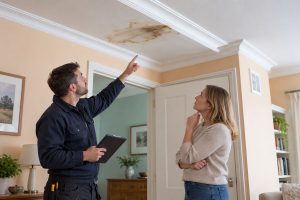
- Recurring ceiling stains, especially after prolonged rainfall.
- Blistering, cracking or splitting in the roof covering.
- Open seams or lifting edges around joints and repairs.
- A growing puddle that covers more of the roof than before.
- Visible dips or sagging, rather than a shallow surface irregularity.
- Water collecting around rooflights or wall junctions.
- Overflowing gutters or outlets during ordinary rainfall.
A musty smell or damp internal finishes may also justify investigation, although these can have causes other than a roof leak.
If water is entering the building, or the ceiling is bulging, seek prompt assistance. Keep people away from the affected area and avoid standing beneath it.
Will the Roof Need Replacing?
Not necessarily. Where the covering remains sound and a blockage is responsible, resolving the drainage restriction may be enough.
A localised defect around an outlet or seam may also be repairable without renewing the whole roof. The important question is whether the proposed work deals with the cause of the ponding.
More extensive work may be needed if the roof has widespread deterioration, damaged decking or falls that consistently direct water into the wrong places.
In some cases, correcting drainage involves altering the build-up beneath the waterproof covering. Repeated surface patches would offer limited value if the underlying shape of the roof remains the problem.
A roofer should explain why a particular approach is suitable and whether any wider defects have been found.
What Should You Do Next?
Start by noting when the puddles appear and how long they remain after rain. If possible, take photographs from an upstairs window or another safe position.
Avoid walking across the roof, pushing tools into outlets or attempting to puncture the covering to release water. These actions can damage the waterproofing and create additional hazards.
Arrange an inspection if ponding persists, becomes more extensive or accompanies any signs of damage.
At Longbridge Cladding & Roofing Ltd, we assess and repair flat roofs across Longbridge, Redditch, Bromsgrove and surrounding areas. Whether the issue involves blocked drainage, a localised defect or a roof that needs more substantial work, we can explain the options following a site visit.
Call 07842 280287 to arrange a free site visit and no-obligation quote.