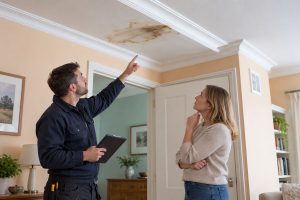
A damp patch on the bedroom ceiling can quickly raise an expensive question: do you need a roof repair, or is it time to replace the whole roof?
Fortunately, a leak does not automatically mean your roof has reached the end of its life. A slipped tile, damaged flashing or a small area of worn felt may be responsible. In other cases, repeated problems suggest that patching individual faults is becoming less worthwhile.
The right decision depends on where the damage is, how far it extends and the condition of the roof around it. Here is what needs to be considered before committing to either option.
How Much of the Roof Is Damaged?
There is a considerable difference between a few damaged tiles and deterioration across several sections of a roof.
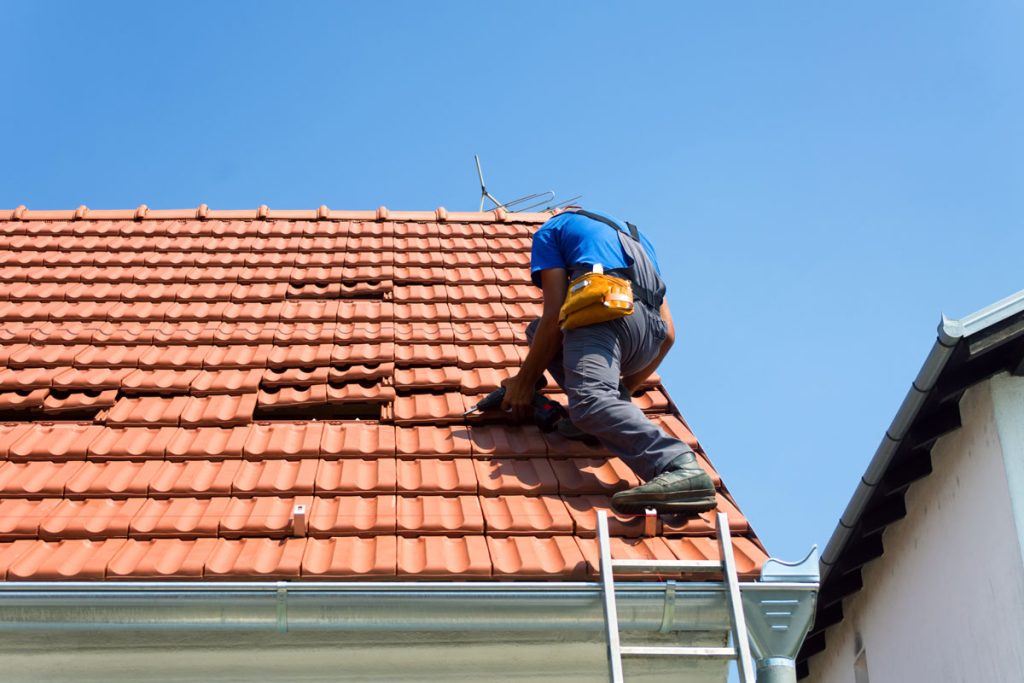
If strong winds have displaced a handful of tiles but the surrounding covering remains sound, a targeted repair may be enough. The same applies to a localised flashing problem around a chimney or an isolated fault where two roof slopes meet.
More widespread damage needs a closer look. Cracked coverings across several areas, failing battens or deteriorating underlay may suggest that the problem goes beyond what can be seen from outside.
Even then, replacing the entire roof is not always necessary. Depending on its construction and condition, it may be possible to renew one section. A proper inspection should establish the extent of the problem before anyone recommends extensive work.
Are Leaks Becoming a Regular Occurrence?
One leak is a problem to investigate. Several leaks over a relatively short period may tell a different story.
Perhaps the roof was repaired last winter, another damp patch appeared in spring, and now water is entering above the landing. Each fault might be repairable individually, but the pattern deserves attention.
It is worth asking whether these are separate, isolated issues or symptoms of wider deterioration. If different parts of the roof keep failing, repeated repairs can become disruptive and increasingly expensive.
However, a recurring leak does not necessarily justify replacement. Sometimes the original source has not been correctly identified. Water can travel along timbers or under roof coverings before appearing indoors, so the damp patch may be nowhere near the entry point.
Finding the cause matters more than simply repairing the area directly above the stain.
What Condition Is the Rest of the Roof In?
A repair is most worthwhile when the surrounding roof has useful life remaining.
For example, replacing damaged flashing on an otherwise sound roof may resolve the problem without further major work. Spending money on the same repair becomes harder to justify if nearby coverings, battens and underlay are also deteriorating.
A roofer should consider the roof as a complete system. That includes its external covering, supporting materials, junctions, drainage and any accessible signs of moisture damage.
The structure matters too. Sagging areas, persistent damp in roof timbers or evidence of decay require further assessment. Replacing tiles alone would not address an underlying structural problem.
An inspection should explain both the immediate fault and any wider concerns that could affect the value of a repair.
Does the Age of Your Roof Matter?
Age provides useful context, but it should not decide the outcome by itself.
An older roof that has been maintained carefully may still be serviceable. A newer roof can develop problems because of poor installation, storm damage or an awkward detail around an extension.
Different materials also age differently, and exposure varies between properties. A sheltered roof may experience different wear from one facing prevailing winds.
If you know when the roof was installed or have records of previous work, share them during the inspection. They can help build a clearer picture.
Be cautious about any recommendation based purely on a roof being “too old”. Its actual condition should support the advice.
When Is a Smaller Repair Enough?
A smaller repair may be the sensible choice when the defect is clearly identified, confined to one area and surrounded by sound roofing materials.
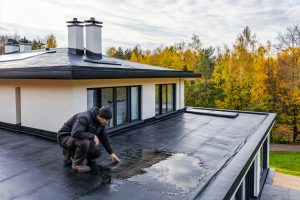
Examples include replacing a few broken tiles, repairing a localised section of leadwork or addressing an isolated defect in a flat roof covering.
Drainage should also be checked. An overflowing gutter can cause water problems around the roofline that may initially look like a roofing failure.
The important distinction is between a repair that resolves the cause and a temporary patch that merely delays further work.
Ask what the repair will involve, why it is suitable and whether there are signs of deterioration elsewhere. A clear explanation should help you understand what you are paying for and what the work is expected to achieve.
When Might Replacement Be Better Value?
Replacement becomes more reasonable when deterioration is widespread, leaks keep developing in different areas, or substantial work is needed beneath the covering.
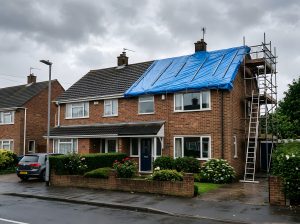
There is also the practical cost of returning repeatedly. Scaffolding, labour and access arrangements can account for a meaningful part of roofing costs. Paying for these several times may make less sense than completing necessary work together.
That does not mean the largest job is automatically the best investment. Compare the proposed repair with the replacement option, including what each covers and what problems may remain afterwards.
If replacement is recommended, ask why a repair or partial renewal would be unsuitable. The answer should relate to the condition of your roof.
Get Advice Before Making the Decision
Photographs taken from the ground can highlight obvious damage, but they rarely show everything needed to decide between repair and replacement. Avoid climbing onto the roof yourself; arrange a professional assessment.
At Longbridge Cladding & Roofing Ltd, we provide roof repairs and replacements across Longbridge, Redditch, Bromsgrove and surrounding areas. We assess the problem, explain the available options and provide a clear, no-obligation quote.
Whether your roof needs a localised repair or more extensive work, the recommendation should match its condition.
Call 07842 280287 to arrange a free site visit and discuss your roofing concerns.